
Master of Science in Wildlife Biology
Apply TodayMaster of Science in Wildlife Biology
Become a future leader and educator in government agencies, academia, and private conservation organizations.
Why Choose Keystone College?
- Learn and explore using Keystone’s 170-acre Woodlands Campus with ponds, streams, wetlands, Lake Manataka Environmental Field Station, and Little Rocky Glen, which provide unparalleled learning opportunities. Few colleges in the nation offer students such a pristine natural environment for education and recreation.
- The program offers the flexibility to take courses remotely while still having access to hands-on research experiences.
- Learn from subject matter experts from around the country.
- A thesis track that allows students to tailor their research to what is of most interest to them.
Contact
Dr. Linda Tucker
Program Director of Wildlife Biology
570-945-8406
NSM@keystone.edu



Woodlands Campus
The 170-acre Woodlands Campus features a nature preserve, apiary, maple sugaring operation, streams, and several hiking trails. The outdoor classrooms and field stations provide unparalleled opportunities for outdoor discovery and learning opportunities.
Howard Jennings Nature Preserve
The College dedicated a portion of its beautiful 170 acre Woodlands Campus as a nature preserve, that will not be developed in any way, to honor the years of dedication of Professor Howard Jennings.
Sugar Shack
Keystone College is very fortunate to have its own small maple sugaring operation that includes a sugar shack with an evaporator and a sugarbush, where we have approximately 275 taps deployed.
Program Goals – Thesis Track
- Acquire specific content knowledge.
- Perform specific laboratory skills with appropriate technology while adhering to all safety requirements associated with those endeavors.
- Manipulate data mathematically.
- Plan and implement a mentored research project.
- Evaluate and articulate, orally and/or in writing, the outcome of research and laboratory experiments.
Program Goals – Non-Thesis Track
- Acquire specific content knowledge.
- Perform specific laboratory skills with appropriate technology while adhering to all safety requirements associated with those endeavors.
- Manipulate data mathematically.
- Evaluate and articulate, orally and/or in writing, the outcome of research and laboratory experiments.
Program Format
The Master of Science in Wildlife Biology will be delivered in an in-person format and/or synchronous remote format.
For those enrolling in the synchronous remote format, an in-person summer residency will be required to fulfill the lab and research components of the program.
Those attending in-person will have the choice to complete their lab and research credits during the fall, spring, or summer semesters.
Fall and spring semester courses will operate on a 15-week session with students completing 9 credits of study per session.
Program Prerequisites
Applicants must possess a bachelor’s degree (any major) from a regionally accredited college or university with an overall GPA of 3.00 or higher, including the following undergraduate coursework:
- General Biology 6 to 8 credits
- General Chemistry 6 to 8 credits
- Mathematics 6 to 8 credits, including a statistics and a calculus course
- Additional Botany, Ecology, and Evolution courses preferred.
Application
Keystone College accepts students to the MS in Wildlife Biology program for fall, spring, and summer terms.
In addition to the application materials required for all master’s applicants, applicants to the MS in Wildlife Biology program must also provide:
- Three letters of recommendation, including one from a science faculty member
- Resume
- Research statement (thesis track) or Statement of purpose (non-thesis track)
Course Requirements
Thesis Track
BIOL 5100 Scientific Writing and Communication
BIOL 6810 Biological Thesis Research I
BIOL 6910 Biological Thesis Research II
4 Ecology and Organismal Biology Elective
2 Animal and Natural Resource Management Elective
1 Environmental and Physical Science Elective
1 Analytical Tools, Research, and Statistical Analysis Elective
3 Laboratory courses
Non-Thesis Track
BIOL 5100 Scientific Writing and Communication
4 Ecology and Organismal Biology Elective
3 Animal and Natural Resource Management Elective
2 Environmental and Physical Science Elective
1 Analytical Tools, Research, and Statistical Analysis Elective
3 Laboratory courses
Elective courses:
Ecology and Organismal Biology
BIOL 5150 Stream Ecology
BIOL 5160 Forest Ecology
BIOL 5170 Aquatic Macroinvertebrates Zoology
BIOL 5175 Ecology of Wildlife Populations
BIOL 5200 Microbial Ecology
BIOL 5210 Animal Behavior
BIOL 5215 Mammalogy
BIOL 5220 Ornithology
BIOL 5225 Ichthyology
BIOL 5230 Herpetology
BIOL 5235 Wetland and Riparian Ecology
BIOL 5265 Mycology
BIOL 5270 Animal Behavior and Parasitism
BIOL 5275 Entomology
Animal and Natural Resource Management
BIOL 5155 Ecological Restoration
BIOL 5180 Fish Management and Culture
BIOL 5185 Natural Resources Policy and Management
BIOL 5190 Population Dynamics
BIOL 5195 Aquatic Ecosystem Conservation
BIOL 5240 Wildlife Management
BIOL 5245 Conservation Biology
Environmental and Physical Sciences
BIOL 5150 Limnology
BIOL 5255 Soils Science
BIOL 5165 Environmental Toxicology
Analytical Tools, Research, and Statistical Analysis Elective
MATH 5150 Statistics and Research
BIOL 5160 Geospatial Methods in Resource Management
Laboratory Courses:
BIOL 5121 Ecological Restoration Lab
BIOL 5157 Tropical Ecology Lab
BIOL 5171 Aquatic Macroinvertebrate Lab
BIOL 5161 Forest Ecology Lab
BIOL 5151 Stream Ecology Lab
BIOL 5201 Microbial Techniques Lab
BIOL 5216 Mammalogy Lab
BIOL 5216 Ornithology Lab
BIOL 5276 Ichthyology Lab
BIOL 5231 Herpetology Lab
BIOL 5251 Limnology Lab
BIOL 5266 Mycology Lab
BIOL 5276 Entomology Lab
Graduate Catalog and Course Requirements
News

Rare Plant Research Wraps Up at Keystone
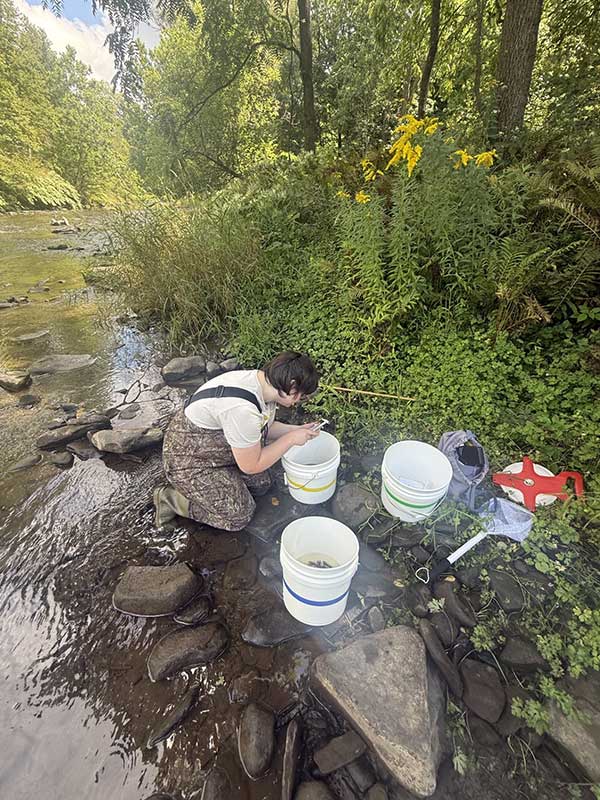
Fall Research Gets Underway at Keystone College
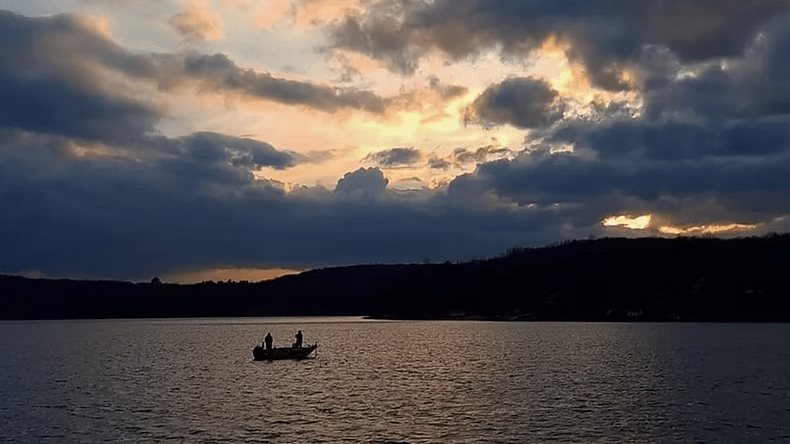
Keystone College Announces New Research Collaboration with Hemlock Farms Community Association in Lords Valley, PA
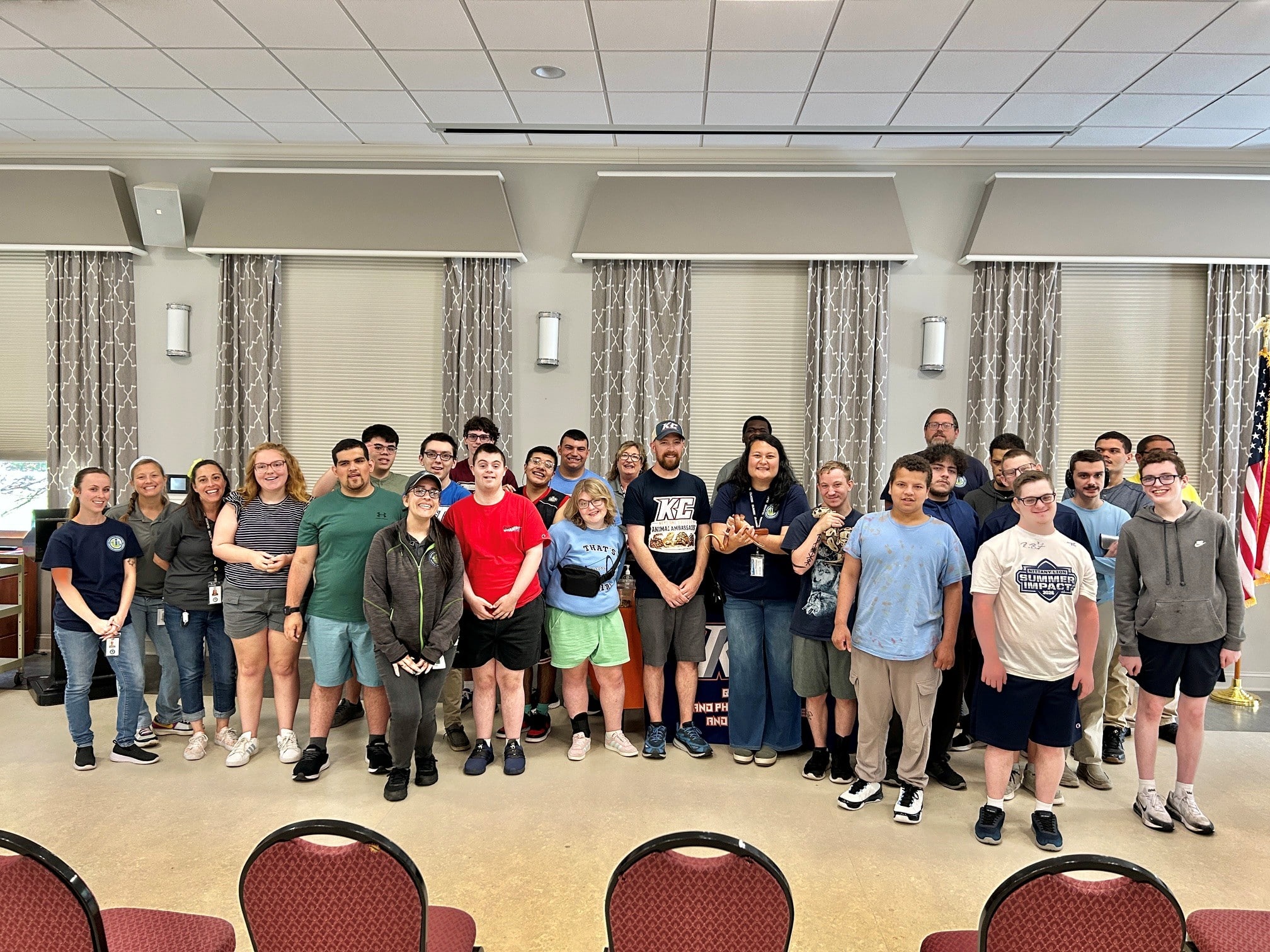
Keystone College Brings Wildlife Biology to Life for My Center for Independent Living Summer Program
You Belong at Keystone
Become part of the Keystone family!