
Contact
Undergraduate Research
Love to investigate the world around you? The undergraduate research program at Keystone College provides you the opportunity to explore and work one-on-one with a faculty mentor.
Gain a competitive edge when seeking employment by learning to use the tools of your chosen profession – whether a spectrometer, an advanced survey technique, or a pottery wheel, you will gain hands-on experience conducting faculty-mentored or student-developed research projects.
Two types of Undergraduate Research:
- Student-initiated research with faculty supervision.
- Faculty-initiated research that involves students as individuals or team members.
Benefits of Undergraduate Research
The excitement of undergraduate research and the process of discovery enriches the learning process and creates positive attributes which will last a lifetime. You will develop strong critical thinking skills and build strong academic credentials which will serve you well when applying for employment or graduate schools. Undergraduate research provides:
- Skills that can translate into the job market
- Hands-on experience using the tools of your trade
- Increased opportunity for graduate admission
- Opportunity to present research at local, regional, and national conferences
Undergraduate Research and Creativity Celebration
April 23, 2025Theatre in Brooks
Keystone College students shared findings of their year-long research projects during the annual Spring Undergraduate Research and Creativity Celebration.
Student Research Projects
The high quality and diversity of our student research projects reflect the excellent work of our students and the commitment of our faculty as mentors and professors. Undergraduate research encompasses both traditional research and creative endeavors.
The talents of many of our graduates are displayed each spring at the annual Undergraduate Research and Creativity Celebration.
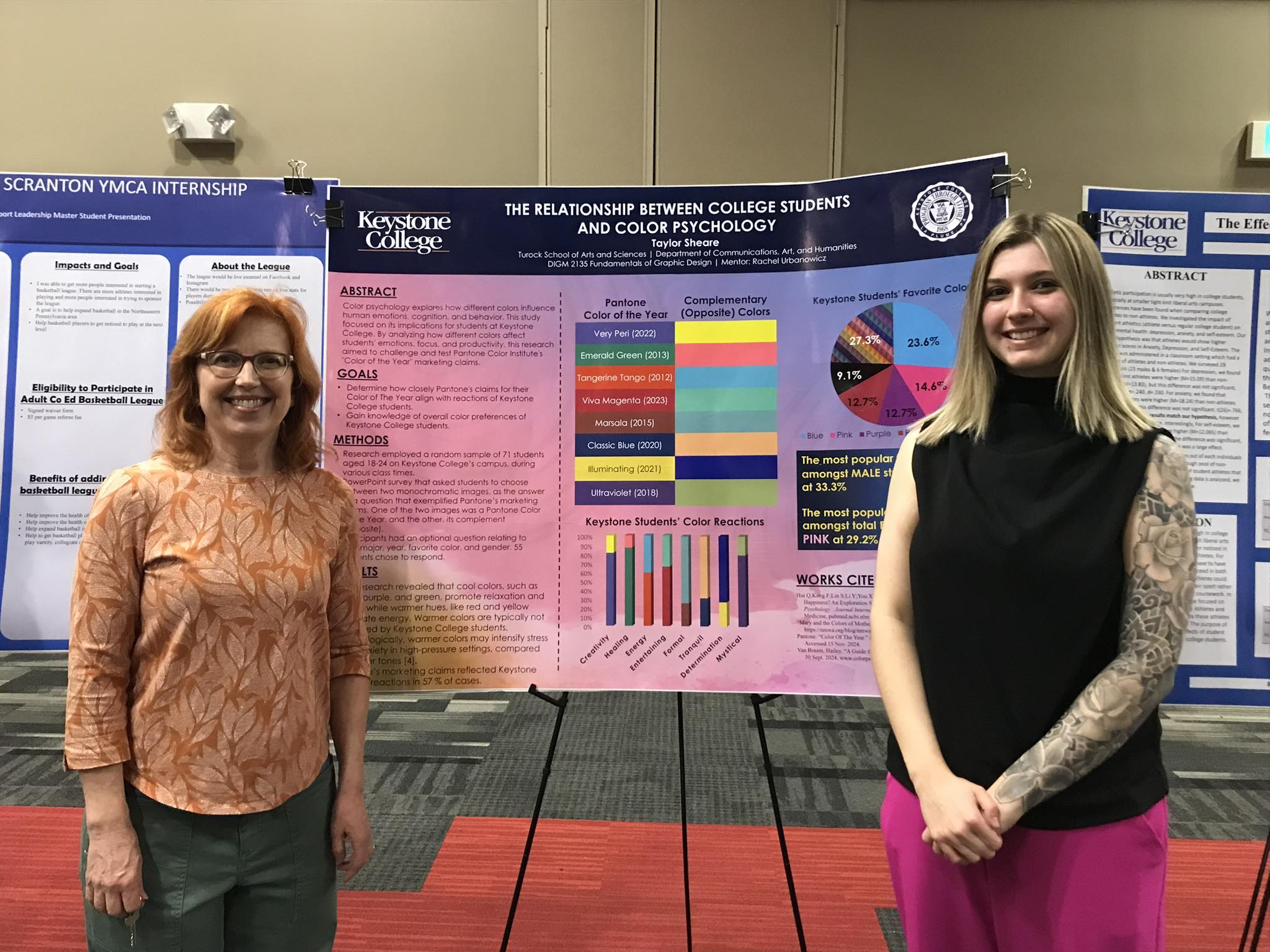
Taylor Sheare
Major: Digital Media
Taylor Sheare, a Digital studied The Relationship Between College Students and Color Psychology.
 The Relationship Between College Students and Color Psychology
This research was my honors project for the course Fundamentals of Graphic Design, mentored by Rachel Urbanowicz. Color psychology explores how different colors influence human emotions, cognition, and behavior. This study focused on its’ implications for students at Keystone College. By analyzing how different colors affect students’ emotions, focus, and productivity, this research aimed to challenge Pantone’s Color of the Year marketing claims.
 To get a deeper understanding of what colors are most compelling to Keystone College students, I created questions that align with the marketing claims and psychological meanings of Pantone’s Color of the Year color codes. I gathered images that represent a situational question, and a random sample of 71 college students on campus during various class times. When presenting, I showed students a PowerPoint document that featured questions and two images that follow the student surveys. On the slides, one image would feature an overlay of the Pantone color, and the other image had an overlay with the complementary color. Students were able to choose which color they best thought suited specific situations. For example, the question “Which room would be a better place to complete a creative project?”, used an image of a creative desk, and overlays of Very Peri and its’ opposite color, Yellow.
 After analyzing the survey results, Keystone College students prefer cool colors, such as greens, blues, and purples, opposed to warmer colors, such as reds, oranges, and yellows.
I am a Digital Media major, and what I love most about the program is the tight knit group of creative students and being able to intertwine my creative aspirations with professionality. I chose Digital Media because technology is ever changing, allowing me to delve into a variety of programs and mediums, while putting creative expression, thought, and influence into technological advances. Some opportunities that I’ve had as a Digital Media major are working as a Promotions Assistant at a local radio station where I use my graphic design skills for professionalism and illustrating a children’s book!

Katie Gogolen
Major: Chemistry and Forensic Biology
Katie Gogolen, a double major in Forensic Biology and Chemistry, synthesized pigments in the lab to produce different color oil paints.
Chemistry and Forensic Biology major, Katie Gogolen, won the 2022 Excellence in Forensic Biology and Excellence in Research awards and is also an Honors Scholar program graduate.
For an honors project, I synthesized pigments in the lab and used them to make oil paints. I made Prussian Blue Paint by mixing together iron (ii) sulfate and potassium ferrocyanide solutions. I dried the pigment, ground it down to a fine powder, and mixed it with linseed oil. I made white paint by adding titanium oxide with linseed oil. I gessoed a canvas and used the paints I made to follow a Bob Ross tutorial called Northern Lights.
I like the Chemistry Department at Keystone because it provides opportunities to take classes studying a wide variety of chemistries, my favorite being Forensic Chemistry because I am also a Forensic Biology major. Studying chemistry broadens horizons and opens up many job opportunities.
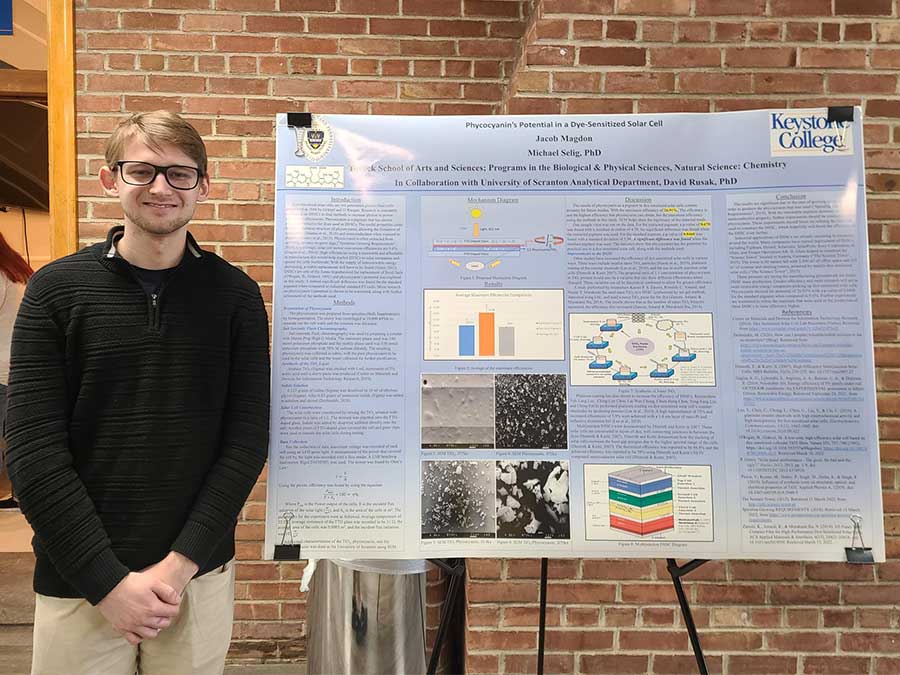
Jacob Magdon
Major: Chemistry
Jacob Magdon, a Chemistry graduate and Chemistry Club president, used phycocyanin, a pigment extracted from spirulina, and made a new method to utilize phycocyanin in a dye-sensitized solar cell.
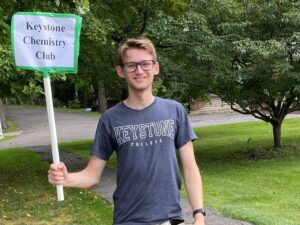
Jacob Magdon, a 2022 Chemistry graduate, won the Excellence in Chemistry, Excellence in Research, and the Thomas G. Cupillari Award for Excellence in the Physical Sciences.
Phycocyanin’s Potential in a Dye-Sensitized Solar Cell
For my project, I used phycocyanin, a pigment extracted from spirulina, and made a new method to utilize phycocyanin easily in a dye-sensitized solar cell. This new method complexed TiO2 and phycocyanin without the need for Nano-TiO2. The solution was analyzed with the help of the University of Scranton Scanning Electron Microscope. Determined that the method was successful, the solution was coated onto FTO-doped glass counter-electrodes with iodide to create the dye-sensitized solar cells. Max power conversion efficiencies were taken, and a high of 26.91% was found, with an average of 14.34%. Compared to the industrial average for solar cells needed to work large scale of 9.6%, a statistical significance was found, with a p-value of 0.0468.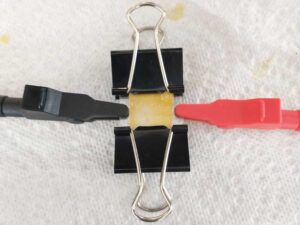
Currently, I am running my data once more to conclude consistency and will be trying to publish a paper about the project with the help of Dr. Selig.
I chose chemistry at Keystone College because chemistry pushed me more than any other class and the professors that teach the chemistry courses are truly inspiring and motivating. The research opportunities were endless, and I never stop learning!