The Science Behind the Season: Why Keystone College Is the Perfect Place to Watch Autumn Unfold
By Dr. Joseph Iacovazzi, Assistant Professor of Wildlife Biology
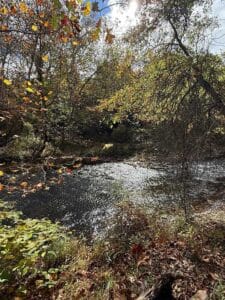
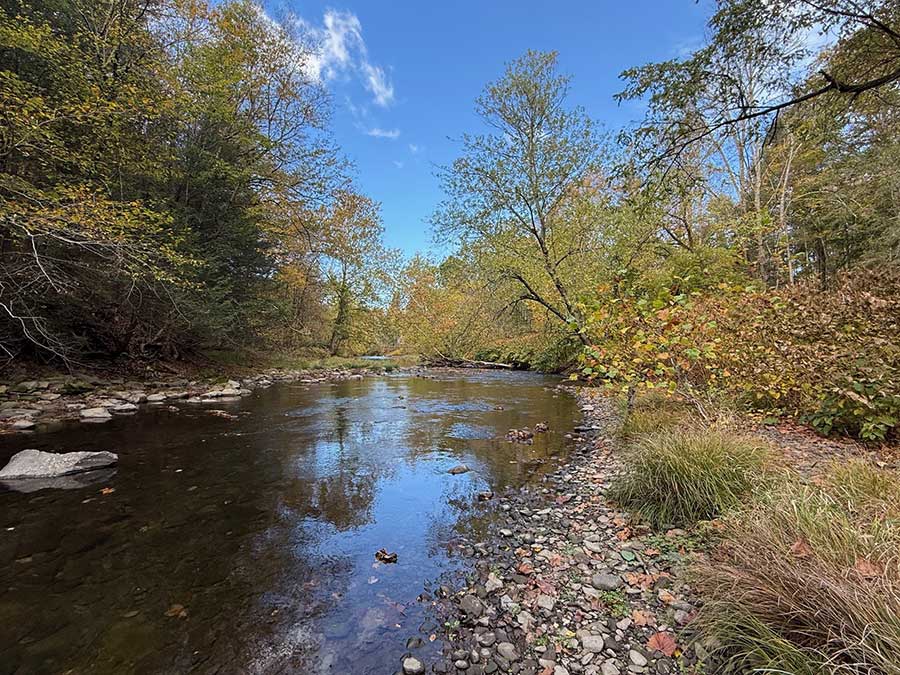
Each fall, the Keystone College campus becomes a natural showcase. The trees surrounding Capwell Hall, the Woodlands Campus Trail, and the forested slopes above the South Branch of Tunkhannock Creek shift from green to a kaleidoscope of yellows, reds, and oranges. This transformation isn’t just an aesthetic event—it’s a precise biological process driven by chemistry, light, and temperature.
As daylight hours shorten and temperatures drop, deciduous trees in northeastern Pennsylvania begin preparing for winter. Photosynthesis is the process by which leaves convert sunlight into sugars and slows down at this time. Chlorophyll, the pigment responsible for capturing light energy and giving leaves their green color, begins to break down. This degradation reveals accessory pigments that were present in the leaves all along: carotenoids and anthocyanins.
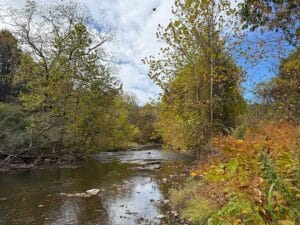
Carotenoids produce the yellow and orange hues seen in birches, hickories, and some maples. Anthocyanins are made late in the season when sugars become trapped in the leaf. These pigments are responsible for the reds and purples that make Pennsylvania’s forests so distinctive.
The timing of this color change varies slightly from year to year, but in northeastern Pennsylvania, peak foliage typically occurs in early to mid-October. The Keystone College campus, nestled in the Endless Mountains region, provides an ideal microcosm for studying this phenomenon. The variety of tree species—maples, oaks, birches, and poplars—ensures a wide spectrum of color. The elevation changes and proximity to waterways like Tunkhannock Creek create diverse microclimates that influence how and when each species responds to the seasonal cues.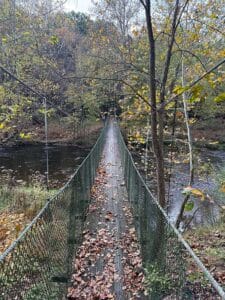
For wildlife biology and environmental science students, this seasonal shift is more than just scenery—it’s an opportunity to witness ecological principles in real time in this living classroom. The breakdown of chlorophyll, the conservation of nutrients, and the eventual leaf fall are all parts of the nutrient cycling that sustains local ecosystems. As leaves decompose, they return vital minerals to the soil, fueling the next generation of growth. Even the fallen leaves serve an ecological role, providing habitat and insulation for insects, birds, and small mammals through the winter.
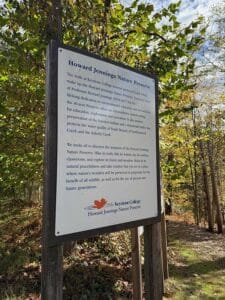
Keystone College’s landscape offers an unparalleled setting to observe these biological processes firsthand. Each trail and stream represent a field station where science meets natural beauty.